![]() |
|||||||||||||||||
|
Frequently Asked Questions
|
|||||||||||||||||
| Many readers have questions they'd like to ask an author. Here are some of the most frequently asked, personally answered by Jack. If you have a specific question not answered here, please feel free to write and ask. | |||||||||||||||||
|
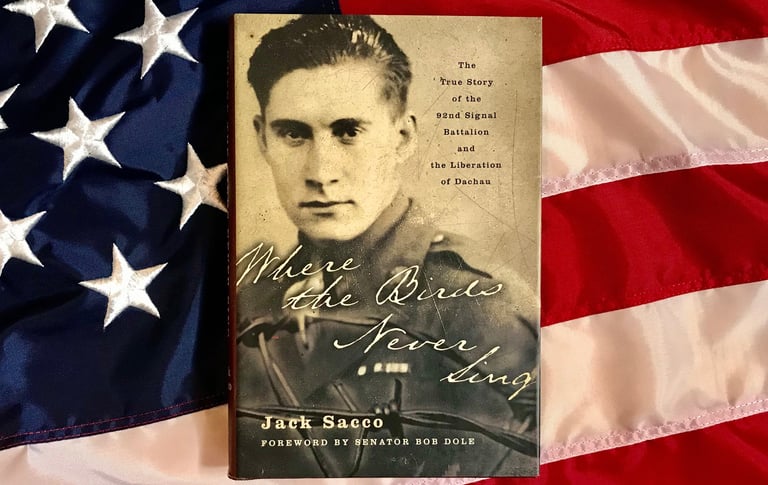
Q. How long did it take you to write Where the Birds Never Sing? A. The entire process took about a year and half. I spent the first year researching the subject and plotting the storyline, then the next four or five months actually writing. Q. How do you come up with an idea for a book? A. I have a growing list of ideas for books. I’ve found the easiest way to come up with an idea is to simply look around and observe. And keep good notes. There are incredible stories happening all the time. Frank Capra, the legendary director of “It’s a Wonderful Life” and “It Happened One Night,” once told me the following: “Jack, if you want to tell a great story, then live a great story.” I’ve found that to be great advice. The trick is having the courage to live the story. Q. How do you make your characters seem so real? Do you ever put your friends into your books? A. Good questions. I take the first one as a compliment, so thanks. I suppose I could say something that sounds somewhat “literary” - for example, that I do consider them real and am simply telling their story, or that I try to see the world through each character’s eyes, blah, blah, blah. But the truth of the matter is that I’m not quite sure. And it’s probably just as well that I don’t know. I just sit there and write and marvel at the wizardry of spell-check. Now to the second question: Yes, if they're nice. Q. Do you have any advice for aspiring writers? A. There’s an old saying … “Write what you know.” Now that doesn’t mean that you should only write about the events of your life. After all, I wasn’t in World War II and I was never in the Army, but I wrote about both. Instead, I believe the phrase “write what you know” means something deeper. It means that you should first look at your own life, your own experiences, and your own emotions before trying to create something that’s not real and for which you have neither reference nor passion. You certainly wouldn’t stand before an audience and start giving a speech on a subject about which you had no knowledge. Yet people often attempt to do precisely that while writing. It’s no wonder they often feel as if their work doesn’t ring true. If you as a writer are emotionally or intellectually disconnected from your work, then how can you expect a reader to become involved in what you have written? While you’re trying to imagine the perfect love story or faraway adventure, you might be missing a wonderful story in your own backyard. In my case, writing what I knew meant telling the story of my father. I certainly know him, and through him, I came to understand what he experienced and felt during the war. When you write what you know, you’ll write with clarity and passion. I honestly believe that everybody has a story to tell. And if you’re absolutely convinced you don’t have one, then do as Frank Capra suggested … go out and live a great story. Experience life … travel … listen to the stories of others … try to understand what they feel … try to understand what you feel. Use your own emotions, even the difficult times, to capture and develop and tell your own story. The entire universe of every human emotion exists right inside your heart. Acknowledge it. Feel it. Use it. Be patient with yourself. Learn to trust your emotions. And have courage. Then, take out a pen and a pad of paper, and write. It doesn’t have to be perfect or flowery or even clever. But it needs to be honest. It needs to be what you know. Q. Did you always want to write a book about your father? A. No. In fact, it never occurred to me. It happened that I told the story of my father’s wartime experiences to some dinner guests one evening in Los Angeles. Several of them suggested I write a book about it. My initial response was to say no. First of all, I assumed that everybody’s father had been at Omaha Beach, had crossed Europe and gone through the Battle of the Bulge with General George Patton, and had liberated a concentration camp. I wondered why anybody would be interested in reading about it since, in my estimation, the story was common to all Americans. However, my guests assured me that that wasn’t the case. In fact, they were so enthusiastic about the idea of me writing such a book that I decided to consider it. I called my father the next morning and asked his opinion. He said, “This is exactly the book you should write. It will be great!” I took that as a good sign. Now that I think about it, perhaps anybody would be excited at the prospect of a book being written about them … well, unless they’ve done a lot of really bad stuff. Anyway, it turned out that my sister, Rosa-Marie, a very good writer herself, had had the idea to write such a book a few years earlier and had done some preliminary research with the U.S. Army. When I asked her advice about whether I should write something on this subject, she shared her research and encouraged me to do so. Q. Did you always want to be a writer? Is your educational background in literature? A. I have a degree in Aerospace and Mechanical Engineering. As electives in college, I studied subjects like physics, astrophysics, biology, and the like. Technically, I’m trained as a rocket scientist. Go ahead and say it … I know you’re thinking it … I’m a geek. So I never gave any serious thought to being a novelist. One thing just led to another and here I am. Q. What did your father do after the war? A. When he returned home from Europe, my father, like many of the men in his battalion, was offered a job with the telephone company. The job’s only drawback was that it involved a great deal of travel. And after being away from home for so many years, he was in no hurry to leave again. He decided to work on the family farm for a year or so before taking a job with the Smith-Corona Typewriter Company. When my grandfather (my mother’s father) retired, my father bought his Italian grocery store and we moved into the house next door. In fact, our house was actually connected to the store. My father and Uncle Tony, who is also mentioned in the book (see the answer to the next question), operated the business until 1969, when the state bought the property and built Interstate 20 through what had been our living room. My father then started his own typewriter and business machine dealership. (This was before the days of computers … in fact, most typewriters at that time were manual, and electric ones were just hitting the market.) He suffered a major heart attack at age 46 and decided to sell the business. Once he recovered, he was offered a job with the State of Alabama, where he worked until he retired. Now he travels around telling everybody he meets especially good-looking flight attendants that he has a book written about him. He generally shows them the book and says, “That’s me on the cover.” Even though he’s 81, attractive women still like to gather around him, play with their hair, and smile. I’m often standing nearby, mumbling something to the effect of, “Hey, I’m the one who actually wrote the book.” Q. How did your father and mother meet? A. Six years after my father returned from the war, he met Rosalie Palumbo at the wedding of a friend. He was the Best Man, she was the Maid of Honor. They married a year later. But here’s an interesting side note: In the book, when my father first left Birmingham, he sat next to a boy named Tony Palumbo on the bus. (He explained to Tony about why he had chosen the Army over the other branches of the military.) Rosalie, who ended up being my mother, was Tony’s little sister. She was only twelve at the time my father left for the Army, but she was twenty-one by the time they married. I once pointed to the cover of the book and asked him the following question: “Hey, when you returned from Europe, you were looking good, you were muscular, a war hero, all of that. So how did you fight off the women?” He looked at me quizzically, shook his head, and grinned. “I didn’t fight ‘em off,” he said. “Why would I do that?” Q. How did your mother feel about Monique being included in the book? A. It was her idea that I include Monique in Where the Birds Never Sing. I knew what had happened, but had made the decision to not include it in the book out of respect for both my father’s and my mother’s feelings. In fact, the original outline for the book has no mention of Monique at all. One day, while I was discussing aspects of the storyline with my parents, my mother said that she thought I should include the story of Monique. I asked if she would be okay with me writing about it. She responded by saying that the story of Monique, though heartbreaking and tragic, was crucial to truly understanding what my father had experienced during the war. Monique, my mother explained, was an important part of my father’s wartime story. You may wonder if there was any tinge of jealousy as she read about the lovely French girl who had captured my father’s heart so long ago. The answer is no. She explained to me that this had all happened while he was in the Army, which is to say years before they met. In fact, my mother was all of 13 years old (and safely tucked away in Birmingham, Alabama) while my father was fighting his way across Europe. In addition, my father is probably the most loyal man who ever lived. So there has never been even the slightest bit of insecurity between my parents. Q. Why did you write Where the Birds Never Sing in the first person? Would you say the book is really by your father, but as told to you? A. Let me answer the second question first, and let me be very clear about this. My father did not dictate any portion not one word of Where the Birds Never Sing to me. I say this precisely because I’ve come across critics who claim that the writing is too seamless and the accounts of the war too realistic to have been written by someone who was not a physical witness to the events. I’ve also been told that my father’s voice was too convincing to have not been his own. I take both as compliments, of course, but the truth is that nothing in the book was dictated to me or borrowed from a journal or anything like that. The book was written by me, not written by my father “as told to” me. I interviewed my father numerous times in my research for the book. But he was not my only source of information, since I also met with and interviewed his buddies and got their versions of the war and of each particular story. In addition, I went through stacks and stacks of documents and maps from the U.S. Army that helped me make the book as historically precise as possible. Then and only then did I sit down and write, assimilating all of the data I had collected and telling the story in the most simple, straightforward, and accurate way I could. And that leads us to the first question … why did I write it in the first person? That’s actually quite simple. When I would hear the war stories as a young kid, the most powerful aspect was the fact that my father had experienced them himself. His telling of the adventures in the first person made each one exponentially more powerful than if he’d been telling me about some other soldiers. To know what he had experienced and felt and to hear it from him in the first person gave the story a far greater emotional impact. One of my goals in writing the book was to share that impact with the reader. Take, for example, the opening sentence in Chapter One: “In all my father’s memories of the farm, there was one day he remembered the most,” doesn’t pack one-tenth the emotional punch of, “In all my memories of the farm, there is one day I remember the most.” Whereas other nonfiction accounts of someone’s wartime experiences always seem to be written in the third person, I felt it my privilege, honor, and responsibility to write my father’s memories in my father’s voice. However, to tell the story through his eyes does present certain unique challenges. For one, I’m taking certain liberties by expressing his inner thoughts using my words. For another, I have to be consistent with his voice throughout the book, even taking into account his emotional growth through the war. Another challenge was the introduction and description of other characters, each through my father’s eyes. In other words, it wasn’t as simple as me (as the author) developing and quoting the characters who would become my father’s friends. It was, instead, a matter of me trying to do it convincingly through my father’s voice in such a way that the reader would not only get to really know each of his buddies, but would feel as if Joe were the one telling her or him the story throughout. One incredibly important aspect of my job was to stay out of the way and to allow my father to be the eyes, the ears, the heart, and the hero. It took both emotional and artistic courage to write this book in the first person, but the response of the readers has been a testament to the ultimate wisdom of that decision. Q. How were you able to reconstruct your father’s letter to Monique? A. Getting information out of my father isn’t the simplest thing in the world. For example, when I would ask him about Monique, he would say, “She was real pretty,” or “She was real nice.” So getting the details of the letter wasn’t easy. As you can understand, he didn’t keep a copy. So when I asked what he had said, he replied, “Oh, I said some real nice things … that I was sorry that she died and that I’d miss her … stuff like that.” I listened to several hours of those types of clues, then sat down and wrote a letter. I then showed it to my father. “That’s perfect,” he said. “Real poetic, just the way I wrote it.” So here are your choices: Either A) I wrote the letter or B) I was able to somehow channel my father’s thought patterns (a semi-frightening possibility) and write it just as he did. You decide. (For the record, he claims he wrote the letter. In that case, I’m not sure what role I played.) Q. Does your father keep in touch with his WWII Army buddies? A. Yes, they have kept in touch through the years. They also have yearly reunions. Q. Did you get to meet his buddies before writing the book? A. I did. In fact, I attended a couple of the reunions in order to get to know the guys better. Not only did I hear lots of stories and lots of different versions of the same story (it’s amazing how many different people can be the actual hero of any given episode) but I also had the rare opportunity to observe certain aspects important to a writer, such as personalities and speech patterns. I was especially taken with how the guys played around and related to each other. Most were in their eighties, but after only a few days together, it was as if I could see them being transformed before my eyes … from old men dressed in mismatched plaids to the dashing young soldiers who had been called to war so many years before. Even after sixty years, there still exists a bond and camaraderie between them. And to watch the glimmers of their youth reappear, if ever so briefly, was magical. It was a pleasure and an honor to get to know them. PS My father doesn’t wear plaid. Q. What did your father and the guys think of the book? A. I was quite relieved to learn that my father and his buddies liked the book. In fact, they said it was remarkably accurate. My father asked me how I had been able to describe everything so clearly without being there. “You had to have been right there with us to have known and written all of this,” he said. I suppose I simply paid attention to all the interviews I had conducted. “But you really did clean up our language,” he added. I actually had my father sign my personal copy of the book. In it, he wrote, "Very good book Jack." So I'd say that he thinks the book is very good. Q. When I read the book, I felt like I was actually with the soldiers. How were you able to make it so realistic? How did you reconstruct conversations? A. Thanks. How did I make it realistic? I’m not sure. I just listened to what my father and the other soldiers told me, and then told their story in a direct and uncluttered way. It was as simple as that. I will say this, as I was writing, I actually felt as if I was with the guys, in the middle of everything they were doing. So as I described what they were experiencing, I was, in a way, describing what I was experiencing with them as they went through training, and then across Europe during the war. Reconstructing conversations was trickier and involved input from the guys. But once again, it ultimately became a matter of emotionally putting myself in the situation and then listening as the conversations unfolded around me. Q. What has been the reaction of the public to Where the Birds Never Sing? A. It has really been overwhelming. You wouldn’t believe the letters and emails I’ve received from readers across the country and even from Europe. People tend to be quite emotional about the book, and that’s good. I’ve gotten a wonderful response from Veterans and people currently in the military, who tell me that the book portrays Army life with great accuracy. I’ve also received a great response from children and grandchildren of WWII Veterans. Until now, many of them have never had the opportunity to know what their fathers and grandfathers did during the war. Interestingly, the most powerful reaction has been from women, who tell me that they are touched by the story of this young farmboy and his relationships. I know the story of Monique resonates with women. My mother was right about that. Q. What is the topic of your next book? A. It is a novel that deals with the mystery and science of the Shroud of Turin. As a scientist and an engineer, I studied the Shroud for several years to develop my research on the subject. More about this book later. Q. If you have an engineering degree, where did you learn to compose music? How long did you study piano? A. I never took a piano lesson or a music composition class. Instead, here’s what happened: When I was a senior at the University of Notre Dame, I attended a party one evening at a place called Washington Hall. Onstage was a Steinway concert grand piano. At one point in the evening, someone suggested that each of us take a turn playing something on the piano. When my turn came, I sat down and began playing. Interestingly, we had done this little game before and I had never really been able to play anything other than chopsticks or something along those lines. But on this night, I started playing real music … with both hands up and down the keyboard with authority. When I finished, all my friends were standing quietly and watching with wide eyes. I remember one of the girls asking, “How did you do that?” “I don’t know,” I responded. “Can you do it again?” she asked. “I think so.” She requested a song, which I played. Then another. Then another. I played nonstop for about two hours that night. After that, I was able to not only play the piano, but also compose orchestral music of any style with relative ease. I’m not sure what happened, but something seems to have been mysteriously triggered inside my brain. Or, perhaps it was a miracle. Either way, it feels incredibly good and is great fun. In fact, before I wrote Where the Birds Never Sing, I sat at my piano for four days and composed music to help me sort out the emotions I wanted to express in the book. Once I had completed the music, which is basically a movie soundtrack, I went to my computer and began writing the book. Composing the music first made the process of writing the book infinitely simpler. |
|||||||||||||||||